
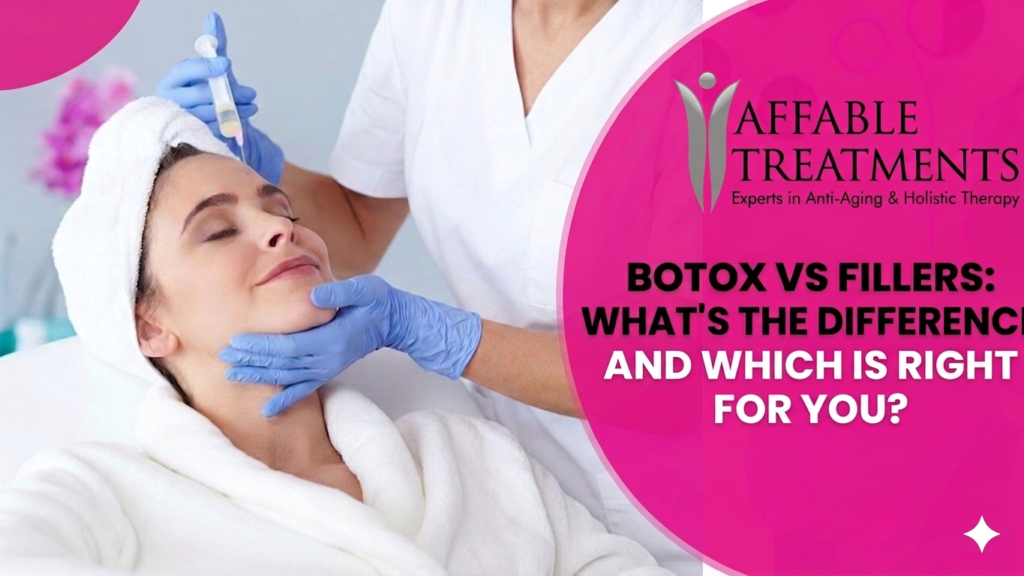
Thinking about smoothing wrinkles but not sure whether to choose Botox vs fillers? You’re not alone. Many people hear these terms used interchangeably but they actually work in completely different ways. Understanding the difference between Botox and fillers can help you choose the treatment that delivers the results you really want.
So, how do they compare and more importantly, Botox or dermal fillers which is better for you? Let’s break it down in a simple, practical way.
What Is Botox?
Botox is an injectable treatment that relaxes facial muscles. When those muscles stop contracting as strongly, the wrinkles they create begin to soften or disappear.
It’s especially effective for dynamic wrinkles, the lines caused by facial expressions like smiling, frowning, or squinting.
Common treatment areas include:
- Forehead lines
- Frown lines (between the eyebrows)
- Crow’s feet around the eyes
Think of Botox as a “pause button” for overactive muscles. Instead of filling wrinkles, it prevents them from forming in the first place.
What Are Dermal Fillers?
Dermal fillers do something completely different. Instead of relaxing muscles, they restore lost volume under the skin.
As we age, our skin loses collagen and elasticity. This leads to sagging, hollow areas, and deeper folds. Fillers help replace that lost structure.
They’re commonly used for:
- Smile lines (nasolabial folds)
- Lips
- Cheeks
- Jawline contouring
- Under-eye hollows
If Botox smooths movement-related wrinkles, fillers rebuild the support beneath your skin. Simple as that.
The Difference Between Botox and Fillers
Still wondering about the difference between Botox and fillers? Here’s a quick comparison:
Botox:
- Relaxes muscles
- Works best on expression lines
- Prevents wrinkles from deepening
- Results last about 3–4 months
Fillers:
- Add volume under the skin
- Treat deeper folds and hollow areas
- Enhance facial contours
- Results last 6–18 months depending on the type
In short: Botox stops wrinkles forming, fillers soften wrinkles that already exist.
Botox vs Fillers: Which Areas Do They Treat Best?
Choosing between Botox vs fillers often depends on where your concern is. Ask yourself:
Do your wrinkles appear when you move your face? Or are they visible even when your face is relaxed?
If lines appear during movement (like forehead creases), Botox is usually the better choice. If lines stay visible all the time (like smile lines), fillers may work better.
Many people actually benefit from both treatments together. It’s not a competition—it’s a partnership.
Botox or Dermal Fillers Which Is Better for Anti-Ageing?
Here’s the honest answer: neither is universally “better.”
The right option depends on your skin goals. Choose Botox if you want to:
- Prevent future wrinkles
- Smooth forehead lines
- Reduce crow’s feet
- Soften frown lines Choose fillers if you want to:
- Restore facial volume
- Plump lips
- Lift cheeks
- Improve deeper folds
A qualified practitioner often recommends combining both for natural-looking results. That way, you address wrinkles from multiple angles instead of relying on a single solution.
How Long Do Results Last?
Another key factor when comparing Botox vs fillers is longevity. Botox typically lasts:
- 3 to 4 months Dermal fillers typically last:
- 6 to 12 months (sometimes longer depending on treatment area)
If you prefer subtle, adjustable changes, Botox offers flexibility. If you want longer-lasting structure improvements, fillers may be more appealing.
Are Botox and Fillers Safe?
Both treatments are considered safe when performed by trained professionals. Side effects are usually mild and temporary, such as slight redness or swelling at the injection site.
The most important decision isn’t just choosing between treatments, it’s choosing the right practitioner.
Always ask:
Is the clinic medically qualified?
Do they provide personalised treatment plans? Are results designed to look natural?
Good aesthetic work should make people say, “You look refreshed,” not “What did you have done?”
So, Which Treatment Is Right for You?
If you’re deciding between Botox or dermal fillers which is better, start by identifying your main concern.
Want smoother expression lines? Botox may be ideal.
Want fuller features or lifted contours? Fillers are likely the answer.
Want both prevention and restoration? A combined approach could be perfect. The best results always come from tailored advice, not guesswork.
When you understand the real difference between Botox and fillers, choosing the right treatment becomes much easier and much more exciting.
While choosing between Botox and fillers, cost is often an important factor. If you’re wondering what to expect before booking treatment, read our detailed guide on How Much Does Botox Cost in the UK? A Complete 2026 Price Guide to understand current pricing and what influences treatment costs.